Packing for a cold trip used to stress me out. I would either freeze in something cute or sweat through three sweaters I did not need. Living out of a carry on since 2021 forced me to figure this out for real.
The fix was never more clothes. It was smarter layers. Once I understood how to layer for cold weather travel, I stopped overpacking and finally stayed warm the whole trip.
Here is the part nobody explains though. Cold is not one thing. Early spring, fall, and deep winter each ask for different layers, different weights, even different colors.
So I am breaking this down by season. Same two questions every time: how do you stay warm, and how do you do it without bulk. No giant coat stuffed in your bag. No checked luggage. Just a system that travels light.
Here’s what you’ll learn today:
✅ The three layer system that keeps you warm in early spring, fall, and winter
✅ How to stay warm in each season without packing bulky, space hogging pieces
✅ The simple carry on trick that handles a 30 degree temperature swing in one day
How To Layer For Cold Weather Travel So You Stay Warm And Pack Light

This post contains affiliate links. If you make a purchase through one of these links, I may earn a small commission at no extra cost to you. Thanks so much for supporting my blog if you’re planning to shop! 💛 (if not, just enjoy the post)
Estimated reading time: 14 minutes
How to layer for cold weather travel comes down to three layers: a thin base that traps heat, a warm middle layer, and a structured outer layer that blocks wind. Match the weight of each to the season, wear your bulkiest piece on the plane, and you stay warm without overpacking or checking a bag.
The simple rule behind how to layer for cold weather travel
Every warm outfit I pack is built from three layers. A base, a middle, and an outer. That is the whole system.
1️⃣ The base layer sits against your skin and traps heat. This is where fabric matters most. A thin merino wool base layer will keep you warmer than a chunky acrylic sweater, and it does not hold sweat or odor. Never use cotton here. It traps moisture and leaves you cold.
2️⃣ The middle layer is your warmth. A cashmere sweater, a cardigan, or a wool knit. Bonus, cashmere compresses down to almost nothing, so it earns its spot in a carry on.
3️⃣ The outer layer blocks wind and rain. The weight changes with the season, and that is the part most people get wrong. A trench in winter leaves you freezing. A parka in early spring leaves you sweating.
💡 One more rule I never break: I build every outfit from the bottom up. Pick the bottoms first, then the sweater that works with them, then the jacket. It stops me from packing five tops that go with nothing.
And always pack a layer in your bag even if your destination looks warm on the forecast. Planes are freezing, and so is every museum and restaurant with the air running.
🌸 Early spring travel: light layers and a big day-to-night swing
Early spring travel is sneaky. Mornings bite, afternoons feel almost warm, and evenings cool right back down. You can lose 25 degrees between lunch and dinner.
This is transitional weather travel, and it is all about layers you can peel off and add back without thinking. The palette gets lighter too. Soft neutrals, dusty pinks, pale blues, cream.
How to stay warm: the light layer move
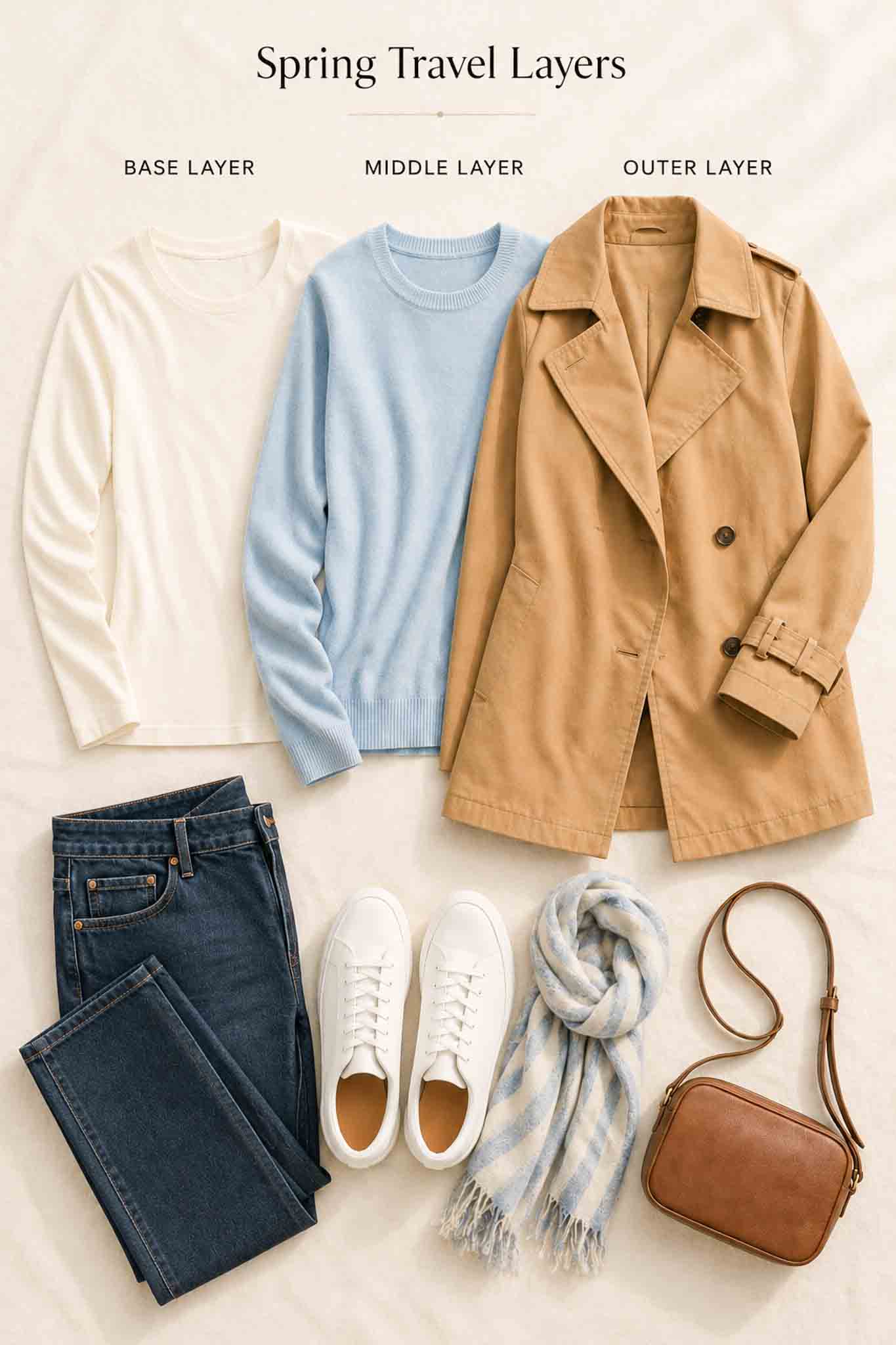
Often times you can skip the thermal base in early spring. You can get away with a regular long sleeve or a light cashmere top as your base, a cardigan or crewneck sweater as the middle, and a trench coat or light jacket on top.
That trench is doing the real work here. It blocks wind, handles light rain, and looks polished for dinner. Just know that a trench is water resistant, not waterproof. A real downpour will soak through, so a packable layer underneath helps on wet days.
🎯 That is exactly how to layer for cold weather travel when the days warm up but the mornings still ask for a coat.
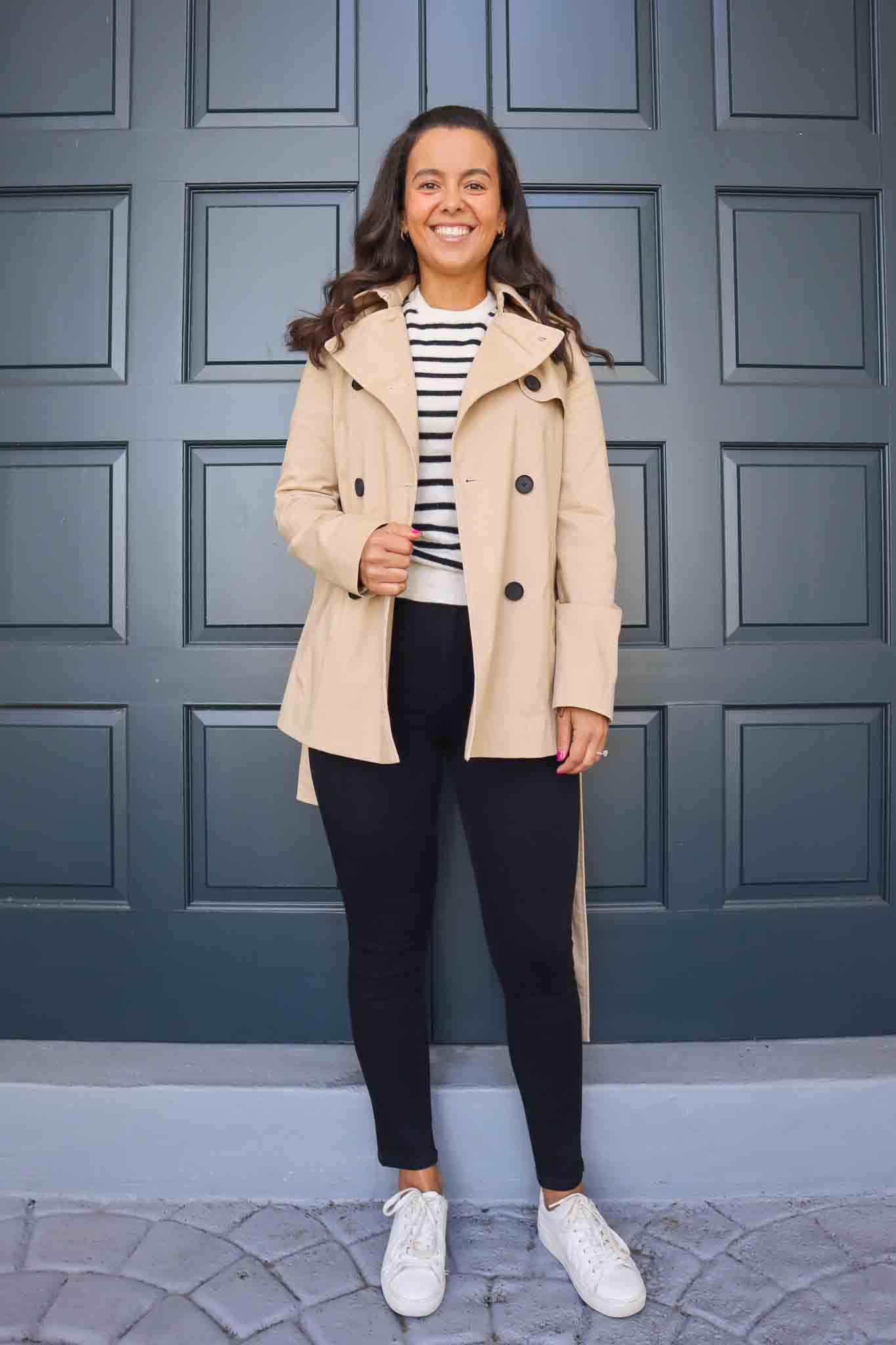
How to pack light: spring travel layers that earn their space
The whole point of spring travel layers is that each piece is thin enough to stack and light enough to carry once you take it off.
This is where cashmere shines. A good cashmere sweater gives you real warmth, then folds down to the size of a paperback. Pack two thin layers instead of one thick one and you cover more temperatures with less bulk.
And please, no linen for the cold parts of the day. Linen does nothing to keep you warm. Save it for true summer weather!
🎯 Also read: My favorite simple travel outfits you can pack on repeat
🍂 Fall travel packing: mid weight layers and the third piece move
Fall is my favorite season to dress for. The colors get rich and moody, the layers get more interesting, and the temperatures are cold enough to be fun without being brutal.
Fall travel packing is where the third piece comes in. That is the layer that turns a plain outfit into a put together one, and it is the secret to looking styled while staying warm.
How to stay warm: master the third piece
Swap the light spring pieces for warmer ones. A merino base layer against your skin, a cashmere sweater for the middle, and a heavier jacket on top.
💡 A common misconception is that merino wool is always itchy. Read this if you may have a merino wool allergy or if wool typically irritates your skin.
A vest is a smart swap when you want core warmth without a full coat. A cashmere vest layers over your merino base, and a puffer vest layers over your sweater. Both add warmth right where you need it and pack down small. That is the move behind the best fall layering outfits.
For the outer layer, fall is wool coat or puffer territory, not a trench. A wool coat for dressier days, a lightweight packable puffer for cold windy ones.
How to pack light: keep it carry on friendly
The trap in fall is packing a separate third piece for every outfit. You do not need that. One neutral fisherman cashmere vest and one cardigan that go with everything will restyle your whole capsule.
That is the core of how to layer for cold weather travel without overpacking: fewer pieces, but pieces that mix with all of your bottoms. A packable puffer helps here too, since it crushes down into your bag when the afternoon warms up.
🎯 Also read: 10 mistakes to avoid when packing for fall in Europe
Here’s a visual with 2 layering examples ⬇️

🧳 Want me to build your cold weather packing list for you?
Knowing how to layer is half the battle. Knowing exactly how many layers to bring for your trip is the other half, and that is the part I love to help with.
Tell me your destination and trip length and I’ll send you a customized carry on packing list, so you bring the right layers and nothing you’ll never wear.
Answer them here ⬇️
🥶 Winter travel style: a thermal base and accessories that do the work
Now we get serious. Real winter is the true test of how to layer for cold weather travel, where the right system makes the difference between miserable and cozy.
I spent seven winters in Chicago, so trust me on this. Good winter travel style is not about piling on more. It is about better fabrics and accessories that actually work.
How to stay warm: base layer up
Winter is when the base layer becomes non negotiable. Start with a thin merino base layer against your skin, add a cashmere turtleneck as your middle, then your heaviest outer layer.
For the outer layer, this is real coat territory. A long quilted puffer for the coldest days, a structured wool coat for dressier ones, or a down puffer when there is wind and snow.
Then the part most lists skip: accessories. A cashmere scarf, a real wool hat, lined gloves, and merino wool socks. Warm up your head, neck, hands, and feet and you can wear a lighter coat and still feel toasty.
🥶 For seriously cold days, add fleece lined tights under your wool trousers. Same warmth, zero bulk.
How to pack light: warmth without the bulk
Here is my biggest winter packing tip: wear your bulkiest coat on the plane. Always. A heavy coat eats half a carry on, but airlines do not count it as a personal item. Wear it through the airport and use it as a blanket on the flight.
Inside your bag, lean on thin warm fabrics instead of thick ones. Your winter travel essentials are merino, cashmere, and wool, never acrylic that looks warm and does nothing. These pack small and do the heavy lifting.
And keep your accessories doing the work. I would rather pack one mid weight coat plus a great scarf, hat, and socks than a giant parka and basic cotton everything. The accessories take up less room and keep you warmer.
🎯 Also read: What to pack for cold weather travel (the full list)

The carry on trick for when temps swing all day
Layering only works if you have somewhere to put the layers you peel off. This is the piece everyone forgets.
My personal item is a small travel backpack, and on a travel day it becomes the home for whatever I take off. Cold morning, warm afternoon, chilly evening again. The cardigan and scarf come off at noon and live in the backpack until I need them.
That little bag is the reason this whole approach to how to layer for cold weather travel actually works in real life. You are always either wearing a layer or carrying it, never stuck holding an armful of sweaters.
💡 A quick tip: keep one packing cube half empty in your backpack. Peeled layers go straight in and stay neat instead of getting crushed at the bottom.
The backpack and the 20 inch carry on are the only two bags I travel with, even in winter.
🎯 Also read: The best pants for fall travel
Quick Recap: How To Layer For Cold Weather Travel By Season
- Early spring. Light base, a cardigan, and a trench coat. Lighter colors, peel as it warms.
- Fall. Add the third piece. A vest or knit over your top, plus a wool coat or packable puffer.
- Winter. Merino base layer, cashmere turtleneck, heavy puffer, and winter accessories.
- Every season. Build from the bottom up, wear your bulkiest coat on the plane, and let a backpack hold your peeled layers. Use that same backpack during your trip to put your layers away during the day.
>>> If heading to Italy in the fall, make sure to read whichever of these posts apply to your trip:
Italy in September | Italy in October | Italy in November (packing strategies are very different – I organized each post by region)
And that is how to layer for cold weather travel without the bulk or the stress.
Once you stop thinking in single pieces and start thinking in three layers, cold trips get so much easier. You stay warm, you look pulled together, and your whole trip still fits in a carry on.
I still get cold faster than most people, the Caribbean kid in me never left. But this system has kept me warm everywhere from a windy spring in Lisbon to a frozen January in Chicago, and it never once needed a checked bag.
Thanks for reading!
XO,
Aimara
>>> PS: still not sure how many layers to actually pack? Answer 2 quick questions here and I’ll send you a customized packing list for your trip.
About the author:
Hi, I’m Aimara, the voice behind Ways of Style. I grew up on the Caribbean coast of Venezuela, then moved to Chicago at 27, where seven winters taught me how to stay warm without looking like a marshmallow. In 2021, my husband Gordon and I sold everything and started traveling the world full time out of a 20 inch carry on.
That means every layer I pack has to work hard, feel good, and fold down small. My goal with Ways of Style is simple: help you pack lighter, dress better, and actually enjoy getting ready for your trip, even when it’s freezing out.
MORE COLD WEATHER TRAVEL ARTICLES 👇🏼
- 14 winter packing mistakes I stopped making
- How to create a fall capsule wardrobe
- The best jackets for cold weather travel (organized by temperature)
- The 10 best pieces to pack for fall in Europe
- Simple travel outfits to pack on repeat
- The BEST shoes for cold weather travel
Cold weather travel layering FAQ
What is the three layer system?
The three layer system is a thin base layer that traps heat, a warm middle layer like a cashmere or wool sweater, and an outer layer that blocks wind and rain. You change the weight of each layer to match the season. This is the simplest way to think about how to layer for cold weather travel without overpacking.
What fabrics keep you warmest without bulk?
Merino wool for base layers, cashmere for sweaters and scarves, and real wool or down for outer layers. These trap heat while staying thin, which is exactly what you want for winter travel. Stay away from acrylic and cotton base layers, since they either fail to insulate or hold sweat against your skin.
How do you pack a winter coat in a carry on?
You don’t, you wear it. Your bulkiest coat goes on the plane, since most airlines do not count it as a personal item. Use it as a blanket on the flight and let your carry on hold your lighter layers. A packable puffer is the one coat you can stuff into your bag once the weather warms up.
How do you dress for a big temperature swing in one day?
Wear thin layers you can add and remove easily, and carry a small backpack to hold whatever you peel off. A cold morning and a warm afternoon are no problem when your cardigan and scarf can come off at noon and live in your bag. This is the secret to transitional weather travel especially.
What are the best travel jackets for women in cold weather?
It depends on the season. For early spring, a trench coat. For fall, a wool coat or a lightweight packable puffer. For winter, a heavier down puffer or long quilted coat. The best travel jackets for women change with the temperature, which is why building around the weather beats picking one single coat.
Can you really travel carry on only in winter?
Yes, and I do it every winter. The trick is wearing your bulkiest coat on the plane and packing thin warm fabrics like merino and cashmere that compress down small. A couple of smart winter packing tips, plus accessories that punch above their weight, mean you never need a checked bag.
Is linen ever good for cold weather travel?
No. Linen wrinkles instantly and does nothing to keep you warm, so save it for true summer trips. For cold weather travel, stick with merino, cashmere, and wool, which all insulate while staying light. The right fabric matters far more than the number of layers you bring.
DID YOU LIKE THIS POST ABOUT HOW TO LAYER FOR COLD WEATHER TRAVEL? SAVE IT FOR LATER OR SHARE IT WITH A FRIEND! 📌


Leave a Reply